ServicesPaint Protection Film
Paint Protection Film in Citrus Heights
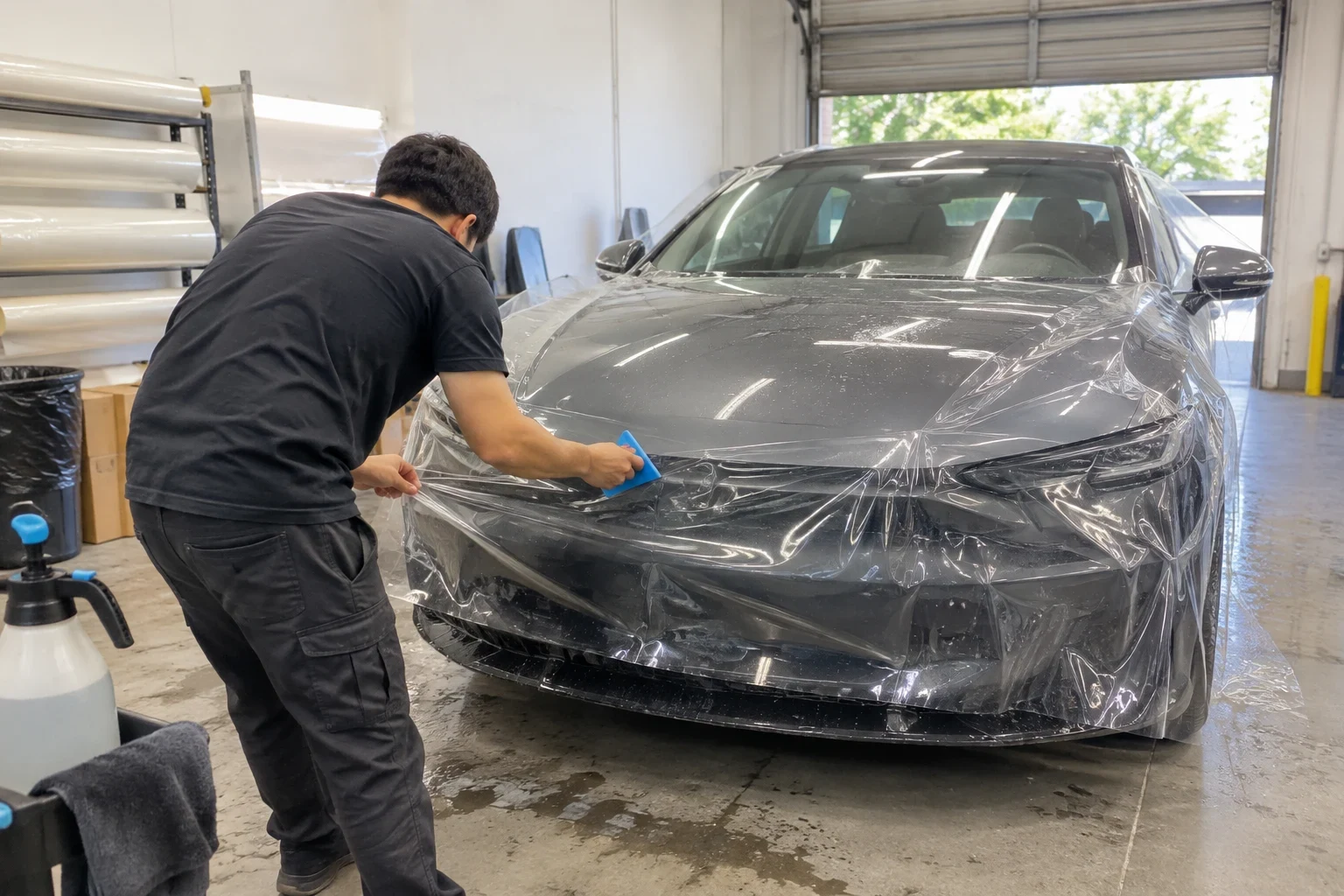
Our shop installs clear urethane film over the hood, bumper, mirrors and other panels that catch stones and grit, so the film absorbs those hits instead of your clear coat. We prep each panel with care and walk you through aftercare so the finish keeps its depth.
What paint protection film does for your car
Paint protection film, often called clear bra, is a thin sheet of thermoplastic urethane applied directly over the paint. It absorbs the impact of small stones and sand that would otherwise chip the clear coat, and the top layer of most current films softens fine swirl marks when it warms in the sun. You can choose a gloss film that looks like the original paint or a matte film that turns a glossy finish satin.
It makes the most sense on a new car, on paint that was just corrected or refinished, and on any vehicle that spends a lot of time at freeway speed behind trucks. It is not a cover for damage that already exists. A chip under film stays visible, so we point out anything that should be touched up or polished first.
If your car already carries marks from an incident, we photograph them with notes before any film goes on. That gives you a clean record of the paint's condition. We can explain how claims usually treat film and paint work, but your insurer and adjuster decide what is covered.
What a paint protection film install includes
- 01
Coverage planning
We look at how you drive and where your car is already picking up marks, then recommend a coverage area. Common choices are a partial front, a full front end, high-wear spots like rocker panels and door cups, or the whole vehicle.
- 02
Paint decontamination and prep
Every panel is washed, clayed and wiped down so no grit, wax or tar is trapped under the film. Light polishing is done where the paint needs it, because film locks in whatever is underneath.
- 03
Patterned and hand-trimmed film
We cut film to your vehicle's panel shapes and wrap edges where the panel allows it. Wrapped edges are harder to see and less likely to collect dirt or lift over time.
- 04
Condition photos
Before the install, we photograph existing chips, scratches and repaired areas. If you are dealing with an insurance claim, those photos and a written line-item breakdown of the work give your adjuster something concrete to review.
- 05
Post-install inspection and care notes
We check edges and seams under shop lighting before you pick up. You leave with plain instructions for the first week and for washing after that.
Questions about Paint Protection Film?
Call(916) 269-3569When paint protection film is worth adding
A car fresh off the lot
Factory paint never looks better than it does at delivery. Getting film on early means the front end does not pick up its first chips on the way to your driveway.
Chips forming along the hood
Tiny pits across the leading edge of the hood, the bumper and the mirror caps are the usual pattern. Correct those spots, add film, and the damage stops building.
Lots of miles at freeway speed
Regular drives toward Roseville or Folsom put you behind trucks and gravel loads for long stretches. Most stone damage happens right there.
A panel that was just refinished
After a covered repair, film guards the new paint you waited on. We record the repaired area in our photos before work begins.
Wear around door cups and sills
Fingernail scratches behind handles and scuffs on rocker panels and trunk ledges build up slowly. Small cut pieces of film cover these areas well.
What to expect from first call to pickup
- 1
A consultation by phone
Tell us about the vehicle and how you drive it, and we go over coverage areas and finish choices with you. You have a quote for the panels you pick before any date goes on the calendar.
- 2
Walkaround at our shop
On drop-off day we go around the car together. We photograph the current state of the paint and agree on exactly which panels get film.
- 3
Prep and film
The paint is decontaminated and any polishing we agreed on is finished. Each piece of film is floated into place on a slip solution, squeegeed down, then trimmed or wrapped at the edges. A front-end job usually stays with us a day or longer.
- 4
Final check and handoff
Every edge is inspected before you come back. A few small moisture pockets may linger for several days and fade as the film cures; we tell you what is normal and when to give us a call.
What sets the price of a film install
Two things drive most of the cost: the amount of the car the film covers and the work the paint needs before film goes on. The same model can quote differently when one car arrives with chips that need attention first. We walk you through a line-item quote by phone so each part of the price is clear.
- How much you cover
- A partial hood and fender package takes far less film and labor than a full front end or a complete wrap. Rockers, door cups or a rear bumper ledge each add a smaller step on top.
- Body lines and vents
- Sharp creases, deep bumper vents and intricate mirror caps slow the install if the edges are to be wrapped cleanly. Some panels call for relief cuts or extra hand trimming.
- Condition of the paint
- Fresh paint often needs only a wash and decontamination. Paint with swirls or chips may need polishing or touch-up first, since film seals in whatever sits underneath.
- Finish and film grade
- Matte and gloss films carry different prices, and thicker or premium films sit above entry-level options. We explain what each one gives you so the choice is yours.
- Old film coming off
- Yellowed or aging film from an earlier install has to be lifted and its adhesive cleaned away. That labor comes before the new film goes on.
Paint protection film questions
Will my insurance pay for paint protection film?
Usually film is treated as an aftermarket add-on, and whether it is covered after a loss depends on your policy. If film was on the car and was damaged in a covered event, some policies may include its replacement. We can provide photos and a written breakdown of the film and labor, but your adjuster makes the call.
Can film go over chips I already have?
It can, but the chips stay visible under the film. We recommend touching up deeper chips and polishing out light marks first so you are not sealing them in. We will show you which spots matter during the inspection.
Can I add a ceramic coating on top?
Yes. Many owners pair the two, with ceramic coating over the film and the rest of the paint to make washing easier and add gloss. We can talk about both on the same call and explain how the Ceramic Coating service fits around a film install.
How do I wash the car afterward?
Wait about a week before the first wash so the adhesive can settle. After that, hand washing with a pH-neutral soap works best. Avoid aiming a pressure washer directly at film edges from close range.
Will the film damage my paint when it comes off?
On healthy factory paint, quality film removes cleanly with heat and patience. Repainted panels with weak adhesion carry more risk, which is one reason we note repaired areas before the install.
Talk through paint protection before the next chip
Tell us your vehicle and how you drive, and we will recommend a coverage area that fits. If you are also thinking about Window Tint or Windshield Protection Film, we can plan it all in one consultation.