Can You Apply Ceramic Coating Over PPF in Citrus Heights?
Film and coating do different jobs, and they work best when the coating goes on top and the timing is right.
Can you apply ceramic over PPF?
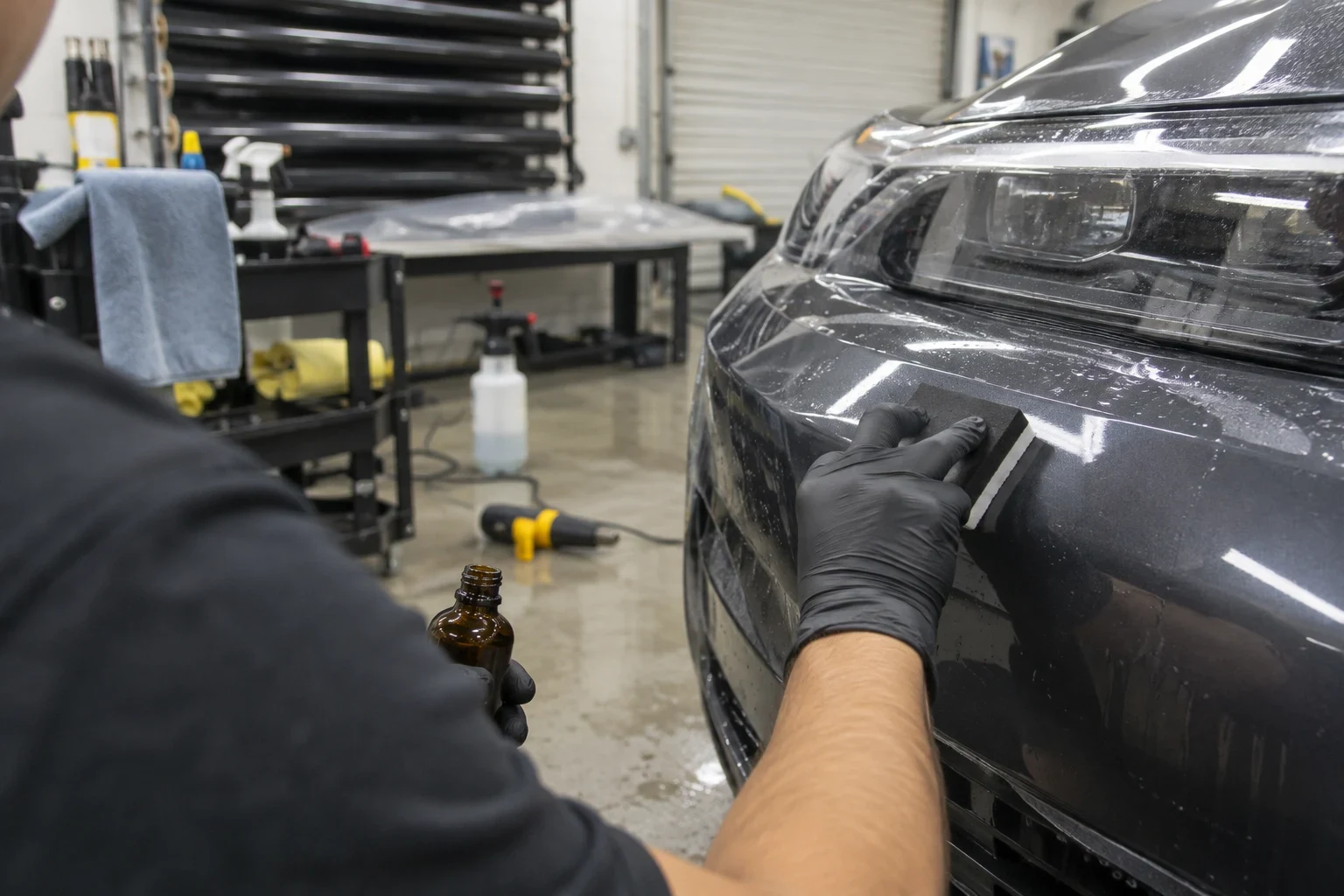
Yes, you can apply ceramic coating over paint protection film, and it is one of the most practical ways to combine them. The film takes rock chips and scrapes, while the coating makes the film's surface slicker, easier to wash and more resistant to staining. The key is a film-safe coating applied after the film has settled. (916) 269-3569
Why put a coating on top of the film
Paint protection film is a thick urethane layer built to absorb impacts. Its topcoat is smooth, but it is not especially water-repellent on its own, and it can hold onto bug residue, tree sap and hard water spots if they sit too long.
A ceramic coating adds a thin, hard, hydrophobic layer over that topcoat. Water beads and sheets off, dirt releases more easily during a wash, and contaminants have a harder time bonding. On a car that sits outside through a Sacramento Valley summer, that matters, because heat bakes bird droppings and sap into any surface faster.
The order matters too. Film goes on bare, clean paint first. Coating goes over the film and onto any painted panels the film does not cover, so the whole car washes and behaves the same way.
- Easier washing, with less scrubbing on the film's surface
- Better resistance to staining from sap, bugs and bird droppings
- A more even look between filmed and unfilmed panels
- Some help keeping dirt from building up along film edges
When the film is ready for a coating
Fresh film needs time. During an install, the film is positioned with a slip solution, and small amounts of moisture stay trapped underneath for a while. That moisture has to escape through the film before the surface is sealed with a coating.
How long that takes depends on the film, the temperature and how much moisture was used. Warm, dry weather speeds it up, while cool, damp months slow it down. We look at the film itself rather than going by a fixed number of days, checking for haze or small water pockets that have not cleared yet.
If we install both at our shop, we plan the timing for you so the coating goes on once the film is ready. If your film was installed somewhere else, bring the car in and we will look at its condition before recommending anything.
How we prep and coat paint protection film
Coating film is not quite the same as coating paint. The surface is softer, and aggressive steps that work on clear coat can mark or lift film, so prep is gentler and more careful around the edges.
We start with a thorough wash and chemical decontamination to remove iron particles and road film. If the film has light marks, we may refine them with methods suited to its topcoat. A panel wipe then removes oils so the coating can bond. The coating itself is chosen for film, and matte or satin film gets a coating made for that finish so it does not turn glossy.
After application, the coating needs time to cure before the car sees water or washing. We go over the cure window with you when you pick up the car, along with the first few washes.
- Wash and chemical decontamination, kept gentle on the film
- Careful work around edges so nothing lifts
- Panel wipe to remove oils before coating
- A coating matched to the finish: gloss, matte or satin
- Clear cure and first-wash instructions at pickup
If the film or coating is damaged later
Sometimes a protected car still gets hurt: a parking lot scrape, debris on the freeway or a fender bender. When that happens, take clear photos of the damage before anything is cleaned or repaired, and keep any paperwork showing what film and coating were installed and when.
If you are filing a claim, we can look at the damage, photograph what we find and explain in plain terms what needs to be replaced, whether that is one film panel or a section of coating. Your insurer decides what is covered, and policies differ, so we will not promise a result. What we can do is give you a clear, written picture of the repair so the conversation with your adjuster is easier.
A damaged film panel can usually be removed and replaced on its own. After a new panel goes on, that area gets recoated once the film has settled, so it matches the rest of the car.
More questions about coating over film
Does ceramic coating stop the film from self-healing?
A coating made for film keeps the self-healing topcoat working. Light swirls in the film still relax with warmth from the sun or warm water.
Can I coat a car with only partial film coverage?
Yes. Many cars have film only on the front end, and the coating goes over both the filmed and painted areas so everything washes the same.
How should I wash a coated, filmed car?
Use a pH-neutral car soap, soft wash mitts and gentle drying. If you use a pressure washer, keep the nozzle back and avoid spraying straight at film edges.
Should I coat old film or replace it first?
If the film is yellowed, cracked or lifting, coating will not fix it. We look at the film's condition and give you an honest answer on whether to coat it as is or replace it.
Talk through film and coating for your car
Call us for a professional consultation. We will ask about your car, how you drive and park it, and whether it already has film, then explain how we would layer paint protection film and ceramic coating and what the timing looks like.