ServicesWindow Tint
Window Tint in Citrus Heights
Bring your car to us and we install carbon or ceramic film cut to every window, blocking UV, cooling a sun-baked cabin and cutting glare. Your dash and seats keep their color longer, and we help you pick a shade that suits the car and meets California rules.
What good window tint does for your car
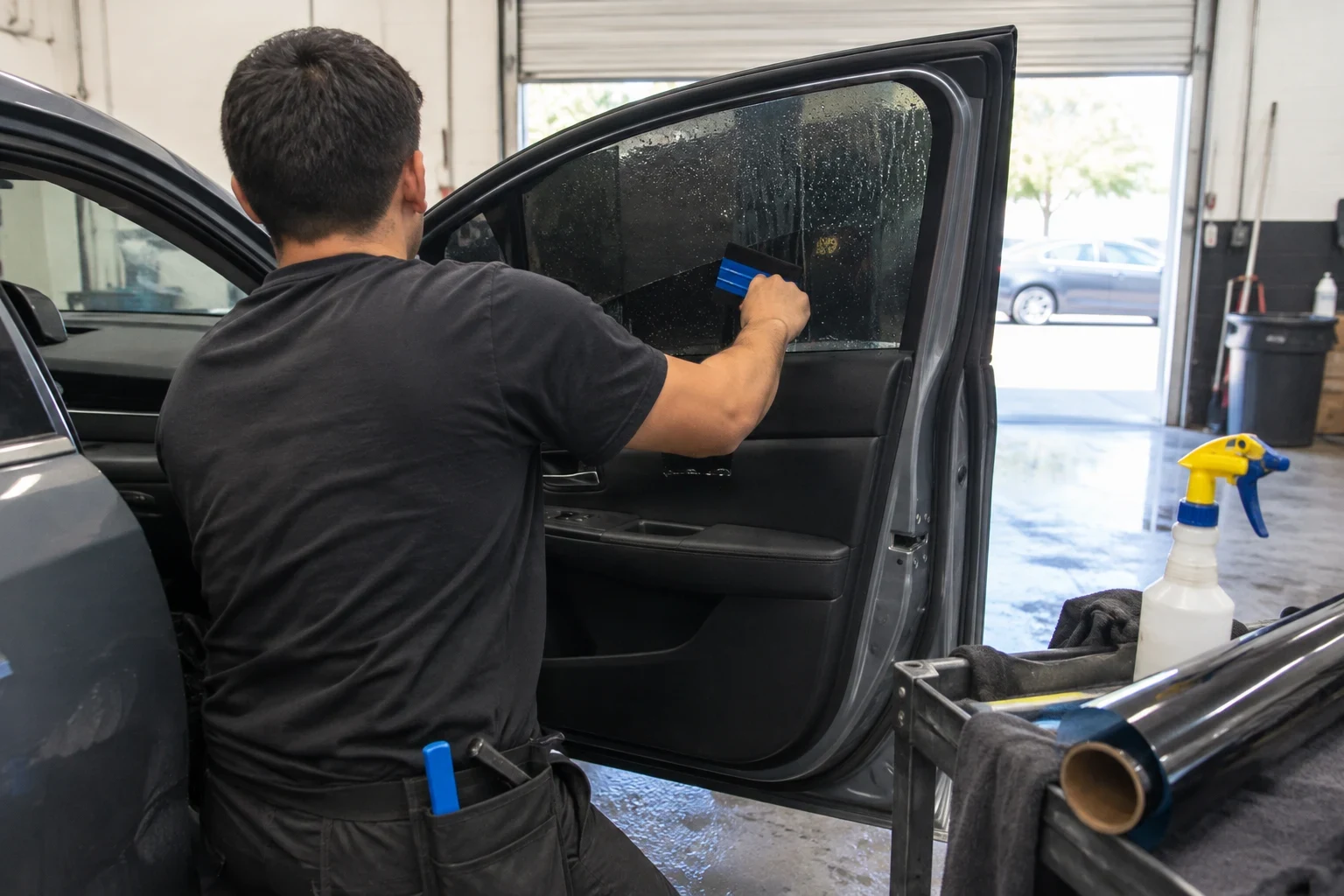
Tint is a film we lay onto the inner surface of each window. A good film stops most UV light, turns away a meaningful share of solar heat and softens the glare that wears you out on the drive home. Over time it also protects dashboards, leather and door trim from fading and cracking.
Films differ more than most people expect. Dyed film darkens the glass but does little against heat, and it tends to go purple as it ages. Carbon film keeps its color and blocks more heat. Ceramic film handles infrared heat best without having to be dark, which counts on the front windows, where California caps how much light the glass can block.
When tint has been damaged in a break-in or lost during a glass replacement, we take clear photos and write down what was on the car, so you can give your insurer accurate details. Your insurer decides coverage; our part is helping you show what was there.
What our window tint work includes
- 01
Film selection by phone and at the shop
We talk through how you use the car, how much heat bothers you and how dark you want it. Then we show film samples against your actual glass so you can see the shade in daylight.
- 02
Careful glass prep
Every window is cleaned, scraped of contaminants and checked for chips before film goes on. Most bubbles and specks in a tint job trace back to prep, so we take our time here.
- 03
Film shaped to each window
Rear glass is curved, so we heat-shrink the film to match the curve before it goes on. Side windows are trimmed to the edge of the glass so there are no light gaps along the top when they roll down.
- 04
Old tint removal
Faded or bubbling film comes off with steam and patience, and we clean every trace of old adhesive. On the rear window we work slowly to protect the defroster lines.
- 05
Damage documentation
When tint has been cut, scratched or lost to broken glass, we photograph it and note the film type and windows involved, so your claim conversation starts with facts.
Questions about Window Tint?
Call(916) 269-3569Signs your car is ready for new tint
Purple or bubbling film
Older dyed tint breaks down in the sun. Once it turns purple or lifts into bubbles, it no longer blocks much heat and it hurts visibility.
A cabin that stays hot
If the steering wheel and seats are still too hot to touch after the AC has been running a while, the glass is letting in too much infrared heat. Ceramic film is the usual fix.
Fading dash and seats
Sun-bleached plastics and dried-out leather mean UV is getting through. Quality tint blocks nearly all of it.
Replacement glass that does not match
After a broken window is replaced, the new glass is often clear while the rest of the car is tinted. We match the shade so the car looks even again.
A tint notice from an officer
Front windows that are too dark can bring a fix-it ticket. We remove the film and install a lighter, legal shade that still rejects heat.
How a tint appointment runs
- 1
Talk it through by phone
You tell us the car, the windows you want done and what is bothering you. We explain film options and give you a quote by phone.
- 2
Drop the car at our shop
Most cars are done within the day. If old tint has to come off first, plan on a little more time.
- 3
Prep, cut and install
We clean and inspect the glass, shape the film for each window, then apply it and press out the water and air. Edges are checked under light before the car leaves the bay.
- 4
Pick up and let it cure
Keep the windows rolled up for a few days while the adhesive sets. A faint haze or small water pockets can show for a week or so and clear on their own as the film dries.
What moves the price of window tint
Cars that look alike on the lot can quote quite differently once we know which film you want and what shape the glass is in. You get a clear quote by phone before we start, and we say up front if removal or extra windows will add to it.
- Film type
- Ceramic film sits at the top of the range because it blocks more heat without needing a darker shade. Carbon and dyed films cost less. Drivers with long summer commutes usually decide the ceramic upgrade earns its keep.
- How many windows, and how curved
- A two-door car simply has less glass to cover than a three-row SUV with small quarter windows behind the rear doors. Deeply curved back glass also needs more shrinking and fitting time.
- Taking off old film
- Aged tint and the glue under it come off slowly, and the rear window needs extra care around the defroster lines. That labor gets added to the job.
- Extra areas
- A visor strip along the top of the windshield or film on a sunroof adds material and time. Full windshield coverage is its own service, Windshield Protection Film.
Window tint questions we hear often
How dark can I go in California?
State rules require the front side windows to pass most visible light, so they have to stay fairly light. On most cars with two side mirrors, the rear side windows and back glass can go darker. The windshield is limited to a strip along the top. We go over what fits your car before you pick a shade.
Will insurance pay to replace my tint after a break-in?
It depends on your policy and your insurer. Glass coverage often handles the window itself, while aftermarket film may or may not be included. We photograph the damage and note the film that was on the car, so you can ask your insurer with accurate details. The coverage decision is theirs, and we do not promise an outcome.
When can I roll my windows down?
Wait a few days so the adhesive can grab, and a bit longer when the weather is cool or damp. Lowering the glass too early can catch the bottom edge of the film and lift it.
Will tint damage my rear defroster?
A fresh install will not harm it. Trouble comes from rushed removal of old film, which can pull up the defroster lines. We use steam and take it slowly to keep them intact.
Should I choose ceramic or carbon film?
Pick ceramic when a hot cabin is what bothers you most. At an equal shade it turns away more infrared heat, so legal front windows can still make a noticeable difference. Carbon suits drivers who mostly want privacy and a deeper look at a lower cost.
Ready for a cooler, clearer cabin
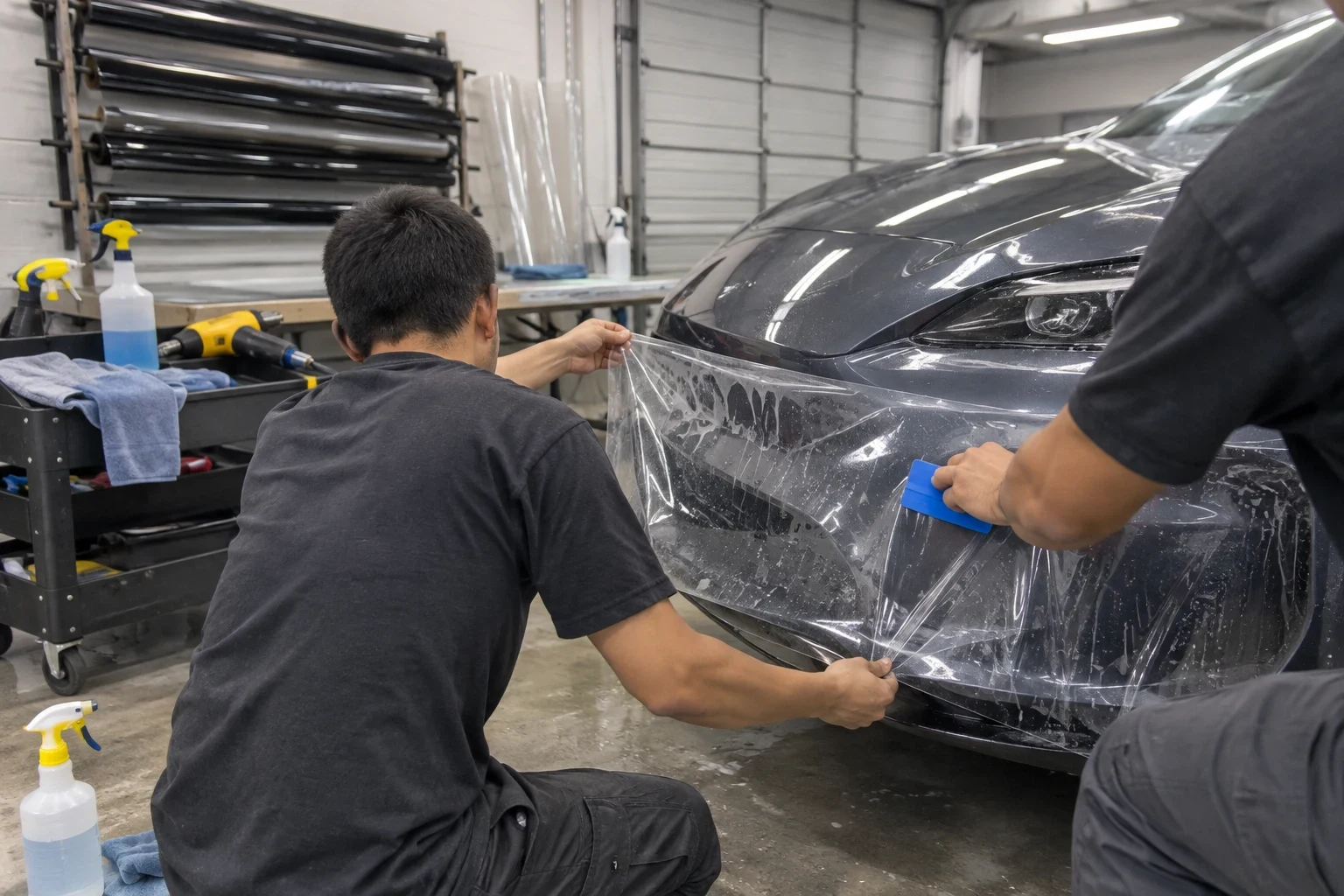
Tell us about your car and the windows you want done. We will walk you through film choices and give you a quote by phone. If you are also thinking about Paint Protection Film or Ceramic Coating, we can talk about those on the same call.